
BCBA Jobs Outside Autism: 3 Things Holding You Back

BCBA jobs outside autism exist in health coaching, consulting, corporate wellness, private practice, and roles that never put "BCBA" in the title. What keeps most BCBAs stuck is one of three things: fear about income and job security, no clear map for what training to trust, and not believing the change is possible for them.
In our September masterclass, Kendra and I asked everyone on the call to type "me" in the chat if they'd switched jobs in the last five years, and the chat filled up faster than I could read it. Three times, four times, eight times, and one person typed "every year," and that is so not normal, and somehow we've all accepted it as normal.
We hear constantly that there are endless jobs for BCBAs, and there are, but if we keep leaving them that tells us something about the jobs. A 2024 study in Behavior Analysis in Practice found that nearly three-quarters of the BCBAs surveyed had left a previous BCBA job, and burnout was the top reason they gave.
So when someone tells me they want to work outside autism but it doesn't feel safe, I believe them, and I also want to look closer at what we're calling safe. The masterclass was built around the three barriers BCBAs told us are holding them back from coaching and consulting, and they're the same three I hear on almost every call I take.
"What keeps most BCBAs stuck is one of three things: fear about income and job security, no clear map for what training to trust, and not believing the change is possible for them."
Barrier 1: Income and the Myth of Job Security
Before the masterclass I emailed our list and asked what was holding people back, and income came up more than anything else. It's 2026, it's expensive to breathe, and the fear usually sounds like "what if I leave the security of my current role and it doesn't work out?" That's a completely valid fear, and I want you to question one piece of it, which is how much security there is in insurance-funded ABA or a school district right now. Some of my favorite humans work in schools, and I'm not sure any of them would call this year secure.
What staying comfortable costs
You're probably comfortable financially for now, and comfort costs something too, because you pay for it with your flexibility, your freedom, and your mental health, and as a field we've decided that's just part of being a BCBA. When I was at my most burnt out I was an awful wife. My husband is the nicest person in the world, he would not hurt a fly, and he'd look at me the wrong way and I'd snap "what?" I was on edge all the time, and it felt like watching myself from above and wondering who this person even was. That's the price of staying somewhere because you believe it's the only thing you can do.
Where the income is
There are more ways to earn outside the clinic than grad school ever showed us, and none of them require you to blow up your life tomorrow. If you want the bigger picture of options, my post on BCBA career change walks through them.
| Path | What it looks like | Where to start |
|---|---|---|
| Private coaching or consulting practice | Private-pay clients, a clear offer, a payment link, no insurance approvals | Pick one population you want to help and build it alongside your current job |
| Employed health coaching roles | Organizations listing the NBC-HWC credential as a requirement or preference | Search "NBC-HWC" or "health coach" in your area |
| Behavior change roles | Wellness, training, and product jobs that rely on behavior science without a BCBA title | Search "behavior change" on LinkedIn instead of "BCBA" |
| OBM and systems consulting | Helping organizations find the real problem and fix the systems around it | Start with the functional assessment skills you already use |
| Bridge income | Part-time work that covers the bills while you build | Teaching, contract work, or a part-time role you enjoy |
Private pay is so normal now. I pay out of pocket for nearly everything, the chiropractor included, because my insurance is awful, and your future clients are doing the same thing. I've watched so many BCBAs start a private practice and replace their salary within a year, and I know that sounds like a sales pitch, but it's what I keep seeing. You also don't need a big following to get there. One of our community members coaches parents of picky eaters and had maybe 200 Instagram followers when she landed clients through a local play cafe, face to face, nothing to do with Instagram.
What you can do with coaching
Coaching skills stay the same no matter who you work with, so I could see a client with ADHD tomorrow morning and a client in perimenopause in the afternoon and use the same foundation for both. That's why our graduates have built practices in fertility, ADHD, intuitive eating, post-college athletes, and coaching for college professors. MBB graduate Nicole went from owning an ABA business with 20 clients to coaching women in perimenopause and burnt-out BCBAs. If you're not sure where you'd fit, here are ten directions to get you thinking.
| Coaching niche | Who you'd help | What changes for the client |
|---|---|---|
| Intuitive eating and body image | Adults tired of dieting | Food takes up less of their day and the scale stops running their mood |
| Menopause and perimenopause | Women in midlife | They build sleep, movement, and stress routines that fit the body they have now |
| Burnout | Helping professionals, BCBAs included | Work stops following them home and their evenings belong to them again |
| Sleep | Adults with sleep habits that aren't working | They keep a wind-down routine they like and wake up rested more often |
| Postpartum | New parents | They make room for their own needs again with goals small enough to fit around a newborn |
| Emotional eating | Adults who eat to cope | They notice what they need in the moment and find other ways to meet it |
| ADHD | Adults with ADHD | They set up systems built around how their brain works |
| Executive health | Leaders and business owners | They protect time for their health and still perform at work |
| Chronic conditions | People managing autoimmune conditions, diabetes, and more alongside medical care | They follow through on their care team's plan in a way that fits their real life |
| Habit change | Anyone ready for a change | New habits stick because they match who the client wants to become |
A coach supports the plan and the person, so anything that needs diagnosis or treatment, like a sleep disorder or an active eating disorder, gets referred out.
If owning a business is a hard no for you, that's completely fine. The morning of the masterclass I spent ten minutes on Google searching health coaching jobs around New Jersey and New York, and role after role was looking for NBC-HWCs specifically. That's part of why I love this space, because there's oversight now and you can't go on Instagram and call yourself a health coach. Then I spent another ten minutes on LinkedIn typing in "behavior change," nothing else, and found jobs that never mentioned a BCBA at all. If you keep searching "BCBA jobs," you'll keep getting the clinic, the insurance company, and the private equity-owned agency you already know you don't want. If you're still fuzzy on what a health coach does day to day, start there.
And when I left my full-time school job, I didn't have a full caseload waiting for me. I taught barre at a boutique fitness studio for $50 an hour while I built up my one-to-one health coaching clients, and I was the happiest I'd been in years. That won't be realistic for everyone, but it was realistic for me, and your version doesn't have to look a certain way because someone told you it should.
Barrier 2: There's No Map (and Not Every Training Is Worth It)
Grad school gave us a map, kind of, but it's a very biased map, and every road on it leads back to the same place. So people ask me all the time what training they need and what's legit, and my answer always starts with "it depends on what you want to do," and then I beg you to do your due diligence, because it is a scary world out there with what people are selling.
I learned this one the hard way. Back in 2021, when a lot of BCBAs were moving into coaching, a popular nutrition certification was all the rage and I paid about $1,000 for it. Did I do anything related to nutrition with that certificate? Absolutely not. A weekend health coaching certificate won't get you the job you think it will either.
If you want to coach, please go through a program approved by the National Board for Health & Wellness Coaching, whether it's ours or someone else's. Graduates of NBHWC-approved programs qualify to sit for the board exam and earn the NBC-HWC credential, the NBHWC keeps a public directory of every approved program, and accredited programs generally run between $6,000 and $9,000.
| Weekend or unaccredited certificate | NBHWC-approved program |
|---|---|
| Not eligible for the board exam | Graduates qualify to sit for the NBC-HWC exam |
| Curriculum standards set by the provider alone | Meets published NBHWC education standards |
| Often recorded videos only | Live practice sessions with feedback |
| Rare mentorship | Look for a mentor who follows you through the program |
| Limited employer recognition | Job postings increasingly list NBC-HWC |
When you compare programs, you want NBHWC approval first, then a mentor who stays with you the whole way, live practice starting in the first weeks. If you're a BCBA, CEUs that count toward your recertification are a nice bonus on top (which Mind Body Behavior offers).
When you're too tired to start anything new
Even with a clear map, so many of you told us you're exhausted and the idea of adding one more thing to your plate feels impossible. I want you to think about the last time you felt overwhelmed. For me it was accruing my hours as a TA, and I still don't know how I paid my rent. I also quit my job and started my business when my son was born, which I am not recommending to anyone, I just need that on record, and of course I was overwhelmed. He turned four in August and I can't imagine having missed any of it.
I hate the saying "we all have the same 24 hours," because everyone's circumstances are different. What I'd ask instead is where your time is going right now. If you drew your day as a pie chart, my guess is that work takes most of it, and unless you own the company, the weight of that company isn't yours to carry home every night.
"A clear map makes the first step smaller. See how MBB's health coaching certification maps the path from BCBA to NBC-HWC."
Barrier 3: Believing It's Possible for You
Underneath the money and the map is the biggest barrier, which is identity. So many of us carry a rule that our job has to have BCBA in the title, and if it doesn't, we wasted the degree, the hours, and the exam. That's rule-governed behavior, and I picture it like a backpack (a pink one, obviously). Every time someone tells you BCBAs have to work in a clinic, another book goes in the bag, and it gets so heavy that it makes sense you're tired. Taking your skill set somewhere new doesn't waste a single thing you earned.
A lot of us wait to feel confident before we decide, and confidence comes after the decision. At my first intake as a BCBA, I had my questions on a piece of paper and read them line by line, shaking, "um, what is your child's date of birth?" Kendra says she didn't say a word at her first IEP meeting. By the end of that year I didn't even need my notepad, and I got there by doing the thing badly first.
Change feels scary, and I'm the most routine person you'll ever meet, so I get it. Scary is not the same as wrong, and two emotions can sit together. You're probably tired right now and you're still reading this. When I left a school job with a pension, my dad was a principal and my mom was a teacher, and I thought they were going to disown me. What I want you to think about is whether something or someone is making your decisions for you.
So let's play out the worst case. You leave, you try something, and it doesn't work out, so you go back to a BCBA job, maybe at a different company, and it's the kind of job you were already unhappy in. Or you take the risk and it works out better than you could have imagined. I'm always going to pick the second one.
If imposter feelings when BCBAs start something new are the loudest part of this for you, that post goes deeper, and building a business owner identity first covers the identity work.
How to Decide What's Next
My three non-negotiables are flexibility, freedom, and fun. Flexibility means picking my son up from school every day. Freedom means that in June I told my husband "let's go to Lake George," and we were in the car the next week, which I can't square with the 10 PTO days a year I used to get. Fun means the second this stops being fun, I'll do something else, because work is allowed to be fun. If you can't name your three, that's the first thing to figure out, because you can't build toward a life you haven't pictured.
From there you have real options, and none of them is the wrong answer. You might stay in your current role, and for some of you that's exactly the right fit. You might go back to grad school, which is a big investment (Kendra's recent master's ran close to $60,000). Or you might take an accredited coaching program that builds on the skills you already have and gives you CEUs along the way.
You also don't need to know exactly where you'll land. When our spring cohort introduced themselves on the first night, about 18 of the 25 people said some version of "I don't know exactly what I want out of this, it just felt right." If you're curious what's in scope for a health coach, that post covers where coaching ends and referral begins.
Getting started
-
Name your three. Write down the three things you want most from your work, and be specific enough that you'd recognize them on a calendar.
-
Run a 10-minute search. Search "behavior change" on LinkedIn and "NBC-HWC" or "health coach" near you, and save five roles that interest you.
-
Check any training against the NBHWC directory. Before you put anything on a credit card, confirm its approval status.
-
Pick one direction first. At the masterclass someone shared five big ideas at once, and my advice was to pick the one you want most, put your energy there, and build the next one after.
Start With a Map Built for BCBAs
Kendra and I spent about ten years trying to figure out how to get from where we were to where we wanted to be, and that's why we built MBB's health coaching certification. We were already board-certified health coaches when we created it, so the whole thing was built to give you the map we didn't have. It's a six-month, NBHWC-approved program with 40 BACB CEUs, a mentor who follows you the whole way, live practice in breakout rooms every week, a coaching workbook, and the business roadmap with everything that helped me grow Mind Body Behavior to seven figures. More than 200 BCBAs have graduated, our graduates have a 100% pass rate on the board exam, and the next cohort starts in March 2027.
If you had a clear path to what's next, would you take it, even if you were scared? I'd love to hear from you, and when you're ready, take a look at the health coaching certification.
Chat soon! ✨
Sarah
FAQ: BCBA Jobs Outside Autism
What jobs can a BCBA do outside of autism?
BCBAs work as board-certified health coaches, OBM and systems consultants, private practice owners, and in wellness, training, and product roles built on behavior change. Many of these roles never use the BCBA title, so searching for behavior change instead of BCBA turns up far more options.
Can a BCBA make a good income outside of ABA?
Yes. Private pay is normal now, so BCBAs can build coaching or consulting practices without insurance approvals, and employers increasingly list the NBC-HWC credential in job postings. Many BCBAs keep their current job or add bridge income while they build, which lowers the financial risk.
Will I get in trouble with the BACB if I work as a health coach?
Working as a health coach does not violate the BACB Ethics Code. Code 1.05 asks behavior analysts to practice within their scope of competence and seek additional training before entering a new area, which is what an accredited health coaching program provides. Many BCBAs practice and market themselves as board-certified health coaches rather than under their BCBA credential.
How do I know if a health coaching certification is legitimate?
Check the NBHWC directory of approved training programs before you enroll. Graduates of NBHWC-approved programs qualify to sit for the board exam and earn the NBC-HWC credential, while weekend certificates and unaccredited programs do not. Accredited programs generally cost between $6,000 and $9,000.
Can health coaches bill insurance?
Health and wellness coaching has had health coaching CPT codes (Category III codes 0591T to 0593T) since January 2020, and the NBHWC is working toward permanent Category I codes. Board-certified health coaches can also give private-pay clients a superbill, which clients may submit to insurance or use with an HSA or FSA, sometimes with a letter of medical necessity from a doctor.
Do I have to quit my job to start health coaching?
No. Most BCBAs complete their training and build their first clients while still working. MBB founder Sarah Burby taught barre part-time while she built her one-to-one coaching practice before going full-time.
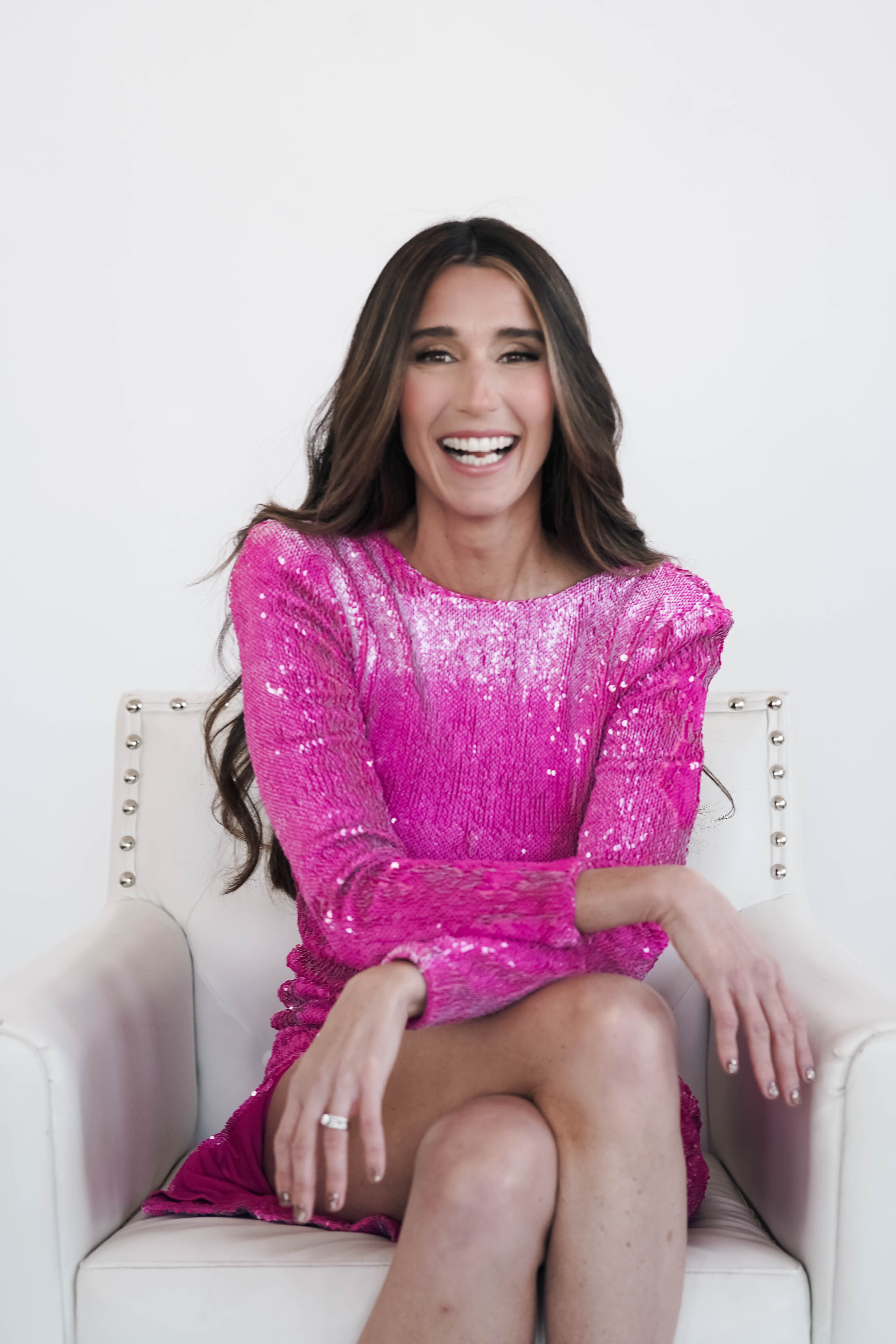
Sarah Burby
Founder of Mind Body Behavior and Clinicians for MORE
More from the Journal

You're Not Weak. You're Burned Out. There's a Difference.
BCBA burnout is not a personal failure. It's what happens when people who genuinely care about helping others get trapped in systems built around bill...

BCBA Career Change: You're Not Starting Over, You're Adding On
BCBAs change careers every day, and most of them are not starting from scratch. They are taking years of behavior science training, clinical observati...
