
BCBA Career Change: You're Not Starting Over, You're Adding On

BCBAs change careers every day, and most of them are not starting from scratch. They are taking years of behavior science training, clinical observation skills, and deep understanding of human behavior and applying it somewhere new. The question is not whether it is possible. It is which direction you want to go and what is actually stopping you from going there.
Here is something I tell BCBAs all the time and I mean it every single time: leaving traditional ABA does not make you a bad person. It does not mean you do not care about your clients. It does not mean the years you spent getting certified were wasted. It means you have been paying close enough attention to know that the way you are working is not sustainable, and you are brave enough to admit that you want something different.
That thought used to paralyze me. It paralyzed a lot of the people I have talked to who have gone on to build genuinely incredible things. And then one day I started asking a different question. Not what is the worst that could happen if I try something new. But what is the best that could happen?
That question changed everything for me. And I think it can do the same for you.
The Lie BCBAs Tell Themselves About Career Change
Here is the narrative I hear over and over in DMs, in Facebook groups, in the quiet conversations that happen when BCBAs finally feel safe enough to say the thing they have been thinking for months: I cannot change careers because I would be throwing everything away.
Chauntae, who owns Path to Goals, a nutrition and physique coaching company, named this better than anyone I have talked to. She said that when BCBAs ask how she made the leap, she has to gently push back on the framing:
"She is not doing anything special. She built a coaching business. She integrated behavior change science into it. People leave corporate careers and start businesses every single day. It is not a new discovery. It is just not something we see inside our field very often, so it looks more impossible than it actually is."
That is the lie. It looks impossible from inside the field because there are not enough people modeling what is possible. Not because it actually is.
Mellanie, who runs the ABA Collective and coaches BCBAs on building businesses and applying OBM, said something that stuck with me too. She said our field has conditioned us to believe we are never expert enough, never within scope, that everything is unethical. And that conditioning keeps talented people stuck in roles that are slowly draining them when they have skills that could be doing real good somewhere else.
You do not have to blow your career up. You do not have to abandon the science. You just have to be willing to apply it somewhere new.
What BCBAs Actually Have That Other People Spend Years Trying to Develop
One of the things that holds BCBAs back from career change is this idea that outside of autism and ABA, their skills do not translate. I want to push back on that hard, because it is simply not true.
Behavior change science is relevant everywhere. Organizational behavior management, which is the application of behavior analysis within companies and organizations, is something BCBAs are doing every time they run a staff training, design a data system, or try to shift the culture of a clinic. Mellanie built an entire program around this, and she told me that most BCBAs who come through her OBM practitioner program do not realize they have already been doing OBM. They just have not had a name or a framework for it.
Health coaching is another natural fit. The Acceptance and Commitment Therapy skills, the motivational interviewing training, the deep understanding of behavior change and values alignment that BCBAs carry, these are exactly what the health coaching research points to as the foundation of effective client work. Over 100 BCBAs and RBTs have come through our program at Mind Body Behavior, and what we hear consistently is that the skills transfer faster than anyone expects.
And then there is the broader entrepreneurship space. Chauntae built a nutrition coaching business. Mellanie built a business coaching and OBM consulting firm. Dani, who co-founded Rooted and Bloom and created the Self Set Go conference for BCBA wellbeing, built a conference and content business. Three completely different paths, all built by BCBAs who took the science and the skills they already had and found a new container for them.
The skills are not the problem. The belief that the skills only work in one context is the problem.
You do not need to become a different person to build a different career. You need to apply what you already know in a different direction.
Ready to expand your work beyond ASD without abandoning your BCBA skillset?
Take the MBB 360 Assessment and discover a structured way to assess wellness, values, barriers, and next steps.
TAKE THE ASSESSMENTThe Guilt That Keeps BCBAs Stuck (and Why It Is Not Yours to Carry)
I want to talk about the guilt, because it is real and it stops so many people.
The culture of ABA has, for a long time, told practitioners that dedication looks like being available all the time, taking every client, staying late without extra pay, and never questioning whether the work is sustainable. If you said otherwise, you were told, sometimes directly and sometimes just through the social dynamics of a workplace, that you clearly did not care enough.
Dani, who spent years in traditional ABA before building Self Set Go, talked about this in a way that landed hard for me. She said that when she started her new business, she had to unlearn years of conditioning around what it meant to be a good clinician. The idea that you can be a fulfilled, joyful professional who makes a real impact and also has a life outside of work, that two things could not possibly coexist. She said believing that kept her stuck for longer than it should have.
Mellanie named it differently. She said she does not care about your burnout if you are not making decisions that guide you toward something different. Which sounds harsh until you understand what she means. She means the complaining without action, the waiting for permission that will never come, the staying in a role that is making you miserable while telling yourself you will figure it out later. That is not dedication. That is avoidance wearing dedication's clothes.
You are not a bad person for wanting more. You are not betraying your clients by building a life that is sustainable. You are not throwing away your credentials by applying the science somewhere new.
The guilt is not yours to carry. Put it down.
What Stopping Before You Feel Ready Actually Looks Like
Every single BCBA I know who has built something beyond traditional ABA will tell you the same thing: they started before they were ready.
Chauntae started posting on Instagram about combining ABA and fitness when she had no idea how to talk to a non-BCBA audience. She spent months posting content that landed with BCBAs but went over everyone else's heads. She had to learn marketing, selling, Instagram, all of it, none of which was in her graduate program. She said she had to put her ego aside and learn how to talk to people like a person instead of a clinician.
Mellanie's first product was a course she sold on Venmo. She posted a price in the comments of a post, asked people to send money and drop their email address, and then emailed the course to each person individually, one by one, creating CEU certificates by hand. She said it was embarrassing, and also that it was action, which is the only thing that actually gets a business moving.
"I had my first health coaching client ask how to pay me and I said 'that's a great question' because I had not figured out how to send an invoice yet. I still got the client."
None of this is polished. None of it requires having everything figured out. What it requires is deciding that in ten years from now you want to be able to say you tried, not that you stayed safe and wondered.
Mellanie put it simply: you just need to be a few steps ahead of the people you are helping. You do not need to know everything. You need to know enough to add value, and a framework to keep learning as you go.
What Career Change Actually Looks Like for BCBAs Right Now
The paths BCBAs are taking are more varied and more creative than most people inside the field realize. Here is what I am actually seeing:
Health coaching practices, often built part-time alongside existing BCBA roles, then transitioned into full-time as the client base grows. Mellanie described this as the digital clinician path: you have a resource, an idea, a skill set that you have been doing informally, and you build it into something that earns. Chauntae coaches women on physique transformation and nutrition, applying behavior science to the behavior change work her clients need. Mellanie consults with organizations and coaches BCBAs on applying OBM in businesses they actually care about. Dani created a conference and content business focused entirely on clinician wellbeing, bringing in speakers on hormone health, sleep, spirituality, leadership, and entrepreneurship, every topic the traditional ABA conference ignores.
What all of these have in common is that none of them required starting from scratch. They required choosing a direction, learning the skills specific to that direction, and then doing the uncomfortable thing of going before they felt entirely ready.
According to BACB data, the number of certified behavior analysts has grown dramatically year over year. The science is not going anywhere. The question is where you want to apply it.
How to Actually Start
- Stop waiting for permission: Nobody is going to tell you that you are allowed to want more. That permission is internal, and it always was. The colleagues who stayed do not get to grant it. The field does not get to grant it. You do.
- Get clear on the problem you want to solve: Chauntae figured out she wanted to help women with physique transformation. Mellanie figured out she wanted to help BCBAs apply the science in businesses. In every case, the niche came from a combination of personal experience and genuine curiosity, not from a market research spreadsheet. Ask yourself: what problem could I talk about forever? Who do I actually want to help?
- Find your people before you feel ready: Dani spent four months traveling solo before she came back and built Rooted and Bloom. She said the wisdom that comes from sitting with your own thoughts, removing yourself from the normal environment, is irreplaceable. You do not have to take four months. But you might need to step outside the echo chamber of the field long enough to hear what you actually want. The community you surround yourself with sets the ceiling for what feels possible.
FAQ: BCBA Career Change
Can a BCBA become a health coach? Yes. The skills you learned in behavior analysis—observation, data tracking, motivational interviewing, breaking down complex goals—translate perfectly into health coaching. The main difference is learning to be client-led rather than prescriptive.
Do I need another degree to change careers? Usually, no. Depending on what you want to do, you may need a specific certification (like the NBHWC for health coaching), but your master's degree in behavior analysis is widely applicable.
What if I still want to use my BCBA credential? You can. Many BCBAs pivot into fields like health coaching, OBM, or instructional design and maintain their credential. The BACB ethical code applies, but the science of behavior is not limited to autism or clinical settings.
Is it normal to feel guilty about wanting to leave clinical ABA? Extremely normal. Many BCBAs feel like they are abandoning their clients or wasting their education. But recognizing that a system is not sustainable for you is a sign of self-awareness, not failure.
Ready to expand your work beyond ASD without abandoning your BCBA skillset?
Take the MBB 360 Assessment and discover a structured way to assess wellness, values, barriers, and next steps.
TAKE THE ASSESSMENTChat soon ✨ Sarah
FAQ: BCBA Career Change
Can a BCBA change careers without losing their certification?
Yes. Changing careers does not require giving up the BCBA credential. Many BCBAs maintain their certification while pivoting into health coaching, OBM consulting, entrepreneurship, or other roles. Many alternative career paths including NBHWC-approved health coaching programs count toward BCBA recertification CEU requirements.
What careers can a BCBA transition into?
BCBAs have successfully transitioned into health coaching, organizational behavior management consulting, employee wellness, leadership coaching, online education and content creation, and entrepreneurship. The behavior change science, observation skills, motivational interviewing training, and ACT framework BCBAs carry are directly applicable across all of these fields.
How do I start a BCBA career change without quitting my job?
Most successful BCBA pivots start part-time. Choose one direction, invest in learning the specific skills that direction requires, and begin building while you still have income. Many BCBAs run a coaching or consulting practice on evenings and weekends for one to two years before transitioning fully.
Is it ethical for a BCBA to work outside of autism?
Yes. The BACB does not restrict BCBAs to working exclusively in autism settings. BCBAs are trained in behavior science which has applications across many populations and industries. Working in health coaching, OBM, education, or other fields is not unethical. Using behavior analytic skills within the scope of a role you are qualified for is what matters.
How do BCBAs find their niche for a career change?
The most effective niches come from the intersection of personal experience, genuine curiosity, and a real problem to solve. BCBAs who have gone through burnout coach other burnt-out BCBAs. BCBAs who struggled with infertility coach women through that journey. The niche is almost always closer than people think, sitting in the experiences they have already lived.
How long does a BCBA career change take?
It varies enormously. Some BCBAs build a full-time alternative practice within 12 months. Others run something part-time for two to three years before transitioning. The timeline depends on how much time and investment goes into building the new path. The people who start before they feel ready consistently get there faster than the people who wait until everything feels certain.
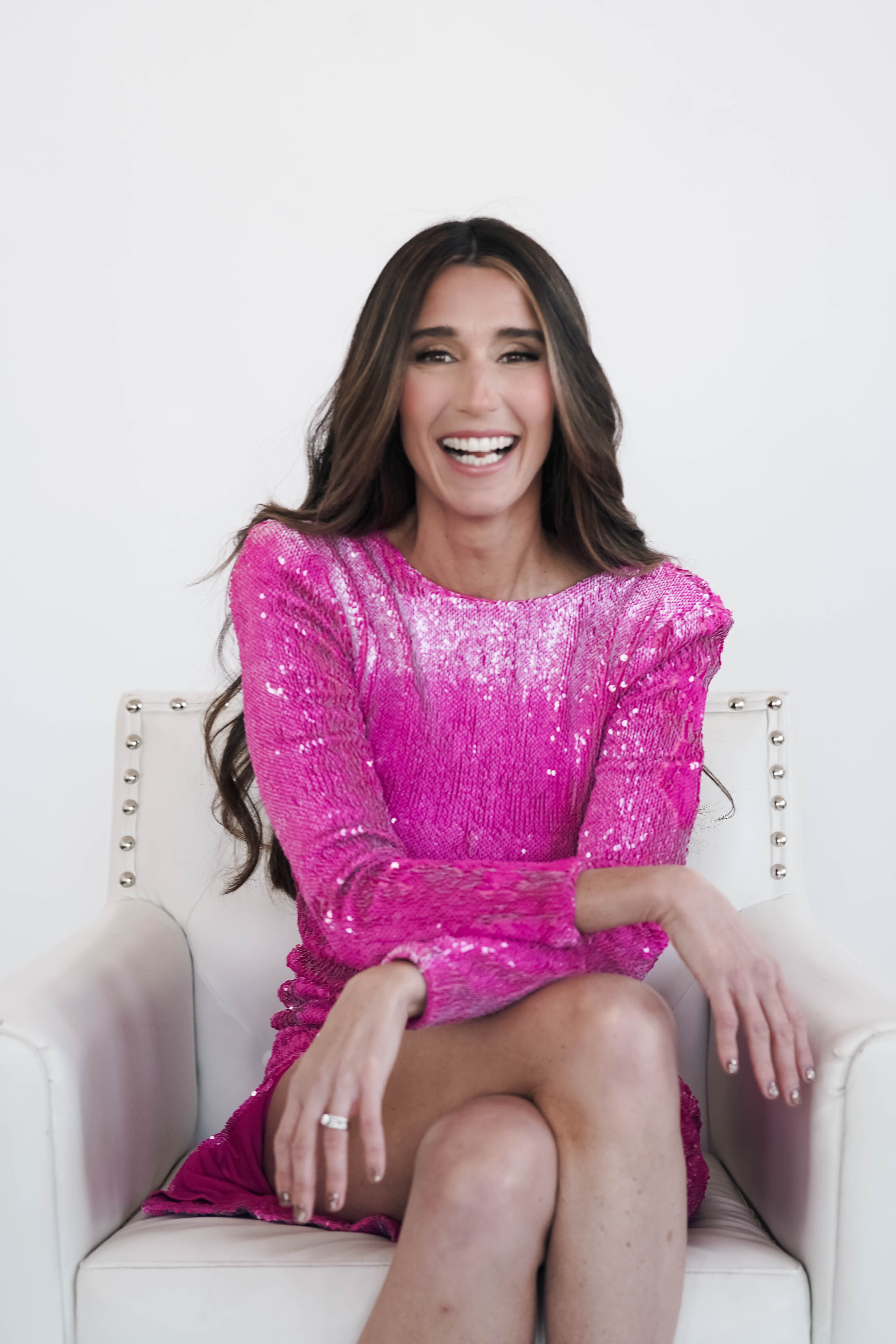
Sarah Burby
Founder of Mind Body Behavior and Clinicians for MORE
More from the Journal

You're Not Weak. You're Burned Out. There's a Difference.
BCBA burnout is not a personal failure. It's what happens when people who genuinely care about helping others get trapped in systems built around bill...

What BCBAs Get Wrong About Client Motivation (and What to Do Instead)
BCBAs are trained to identify what's wrong and fix it as efficiently as possible. That precision is exactly what makes them excellent behavior analyst...
