Can a BCBA Become a Health Coach? (Yes, and Here's What It Actually Looks Like)

The short answer to whether a BCBA can become a health coach: yes, and they are unusually well-suited for it. The skills you've built, observing without judgment, tracking behavior across time, asking questions before prescribing solutions, are the foundation of transformational health coaching. Over 150 BCBAs and RBTs have already made this move through Mind Body Behavior's program. The main thing you have to add is a certification and one significant mindset shift.
With recent industry data suggesting up to 72% of BCBAs experience regular burnout, it's no surprise so many are looking for new ways to apply their science. I used to think that if I wanted something different from ABA, I'd have to blow the whole thing up. New field, new credentials, new identity, like everything I'd spent years building just stopped mattering the second I wanted more.
I used to think that if I wanted something different from ABA, I'd have to blow the whole thing up. New field, new credentials, new identity, like everything I'd spent years building just stopped mattering the second I wanted more.
And then I started watching what happened when BCBAs actually made the pivot, and I realized something. You're not starting over. You're adding on. And the skills you already have? They're more relevant than you think.
So if you've been sitting with the question of whether a BCBA can become a health coach, here's the longer answer, the one that's actually useful.
What Health Coaching Actually Is (and Why BCBAs Are Weirdly Well-Suited for It)
What Health Coaching Actually Is (and Why BCBAs Are Weirdly Well-Suited for It)
Most people think health coaching is about giving people answers. Meal plans. Habit trackers. Accountability check-ins. A five-step system for living better.
Here is what it actually is: the moment you sit across from a client and put it all on yourself, as the coach, to fix something, you've already lost the person in front of you. You're not coaching anymore. You're performing.
Real coaching, the kind that actually changes someone's life, is about creating the conditions for people to see something they couldn't see before. Your job isn't to get them somewhere. Your job is to get curious enough, and quiet enough, that they can hear themselves think.
BCBAs know a thing or two about observation. We know how to watch. We know how to ask questions before we prescribe. We just haven't always been taught to trust that those skills work in a completely different setting.
"It's fully emboldened my practice and my life. Being around other like-minded people and not having to be squeezed into a little box was so freeing."
— Erin Lopez, BCBA, MBB graduate
The One Thing BCBAs Have to Unlearn
The One Thing BCBAs Have to Unlearn
One of the BCBAs in our cohort said something I hear from so many of you: "The more I cling to an outline, the less authentic I feel. But letting go of the outline goes against my professional instincts as a BCBA."
And here is what I want you to think about instead.
What would it look like to show up for a struggling friend as a friend, not as a coach? Not with your task analysis and your protocol, but just as a person who is paying attention and responding to what is actually in front of you? Open. Listening. Responding as you go.
That's coaching.
We're task-analysis people. We love a step-by-step. And there's nothing wrong with that, that precision is what makes us excellent at what we do. But in coaching, clinging to the framework creates distance, and connection is the whole thing. Coaching that makes a real difference is built on connection, relationship, trust, and deep listening.
The outline can still exist. Just stop orienting to it. Orient to the person instead.
What BCBAs Bring That Other Coaches Don't
This is the shift that takes most BCBAs a few sessions to feel, and then they can't imagine going back. One of our graduates, Ali, BCBA, NBC-HWC, said that one of her biggest fears going in was feeling judged by other BCBAs for her clinical knowledge. What she found instead was the opposite:
"I felt so connected to everyone in the cohort because we all shared so many of the same thoughts, feelings, concerns, and values."
What BCBAs Bring That Other Coaches Don't
This is the part I want you to sit with, because a lot of us undersell ourselves here.
You've spent years learning to meet clients where they are. You've learned to observe without assuming motivation, to track behavior across time, to get curious before getting prescriptive. You know that what someone does on the surface is almost never the whole story.
That is not nothing. That is the foundation of transformational coaching.
Think about what we actually do in behavior analysis: we keep measuring. We do not assess once at intake and assume that is the whole story. We track across time, across settings, across relationships. Most coaches have to work hard to develop that instinct. You already have it, and it is one of the most underrated things you bring to this work.
What Happens When a Client Actually Sees Something
There's also this: You understand the behavior-change literature at a level most health coaches never reach. Erin Lopez put it well after completing MBB's program:
"It broadened my worldview in such a way that I can use ACT differently, use RFT differently, use motivational interviewing."
What Happens When a Client Actually Sees Something
One of the most powerful things about health coaching is what happens when a client sees something about themselves they could not see before. Not something you told them. Something they arrived at through the conversation, through your questions, through the space you held for them to think out loud.
Once a client sees it, they cannot unsee it. And that is why insights are so much more powerful than advice. Advice gives someone a task. An insight gives them a choice they did not have before, because you cannot choose differently when you do not even know you're doing the thing.
Your job as a health coach isn't to hand people the answer. Your job is to create enough space, enough safety, enough curiosity, that they find it themselves. And then they have it forever.
What the Pivot Actually Looks Like in Practice
BCBAs are built for this. We spend our careers learning to watch carefully, ask before we prescribe, and hold back our own conclusions long enough to find out what is actually happening. That discipline, applied in a coaching context, is what makes the difference between a client who feels fixed and a client who feels found.
What the Pivot Actually Looks Like in Practice
Over 150 BCBAs and RBTs have completed or are currently completing the health coaching program at Mind Body Behavior, and what we hear over and over is that the transition is less of a leap than it feels like from the outside. If you're experiencing BCBA burnout, this pivot offers a sustainable alternative. Over 150 BCBAs and RBTs have completed or are currently completing the health coaching program at Mind Body Behavior, and what we hear over and over is that the transition is less of a leap than it feels like from the outside.
Nicole, BCBA, described her life before and after this way:
"Before, I was an ABA business owner with 20 clients. Now I'm coaching women in perimenopause and burnt-out BCBAs. I now have a day that I love, a schedule that I love, and I'm feeling like I am making much more of a difference than I was when I was going through the motions."
That's not a minor adjustment. That's a complete redesign of how work feels, and it started with one credential added on top of the one she already had.
A few things that translate directly from BCBA training into health coaching practice, and that you can start applying even before you're certified:
- Always be in discovery mode. In ABA we collect data continuously rather than assuming baseline carries forward. In coaching, that same instinct becomes staying curious about where a client actually is today, not where they were last week. Ask: what's going on right now? What would feel different if things were going well? Where are you today? That continuous curiosity is something BCBAs already have.
- Trust your observation skills. You have spent years noticing what is actually happening beneath the surface behavior. In coaching, you do the same thing with words. What is the client circling around? Where do they get quieter, or more animated, or more careful? Your trained eye for behavior does not disappear in a coaching room. It deepens.
- Be interested, not interesting. The righting reflex, that pull to fix and prescribe, is the thing to watch. The moment you stop trying to be the expert in the conversation and start being genuinely curious about the person in front of you, everything shifts. As a BCBA, you already know how to be a student of someone's behavior. Bring that into the coaching room.
How to Get Started as a BCBA Who Wants to Health Coach
"The amount that the course costs compared to the progress I've made within my career, within myself, within my confidence, within my mindset, there is no price. There is no price on how far I have grown as an individual, as a human, as a practitioner."
— Martina V., Behavior Consultant and Health Coach
How to Get Started as a BCBA Who Wants to Health Coach
The path is more straightforward than most people expect.
Step 1: Get clear on why. Are you looking to add coaching to your current ABA practice, or do you want to pivot away from clinical work entirely? Both are valid, and the answer shapes how you use the credential.
Step 2: Choose an NBHWC-approved program. The NBHWC is the credentialing body for health coaches, and graduating from an approved program is what makes you eligible to sit for the board exam. MBB's program was built specifically for BCBAs and counts toward your BCBA CEU requirements, 40 CEUs total. See our 40-CEU BCBA program.
Step 3: Do the mindset work alongside the skill work. The content is learnable. The shift from "I need to fix this person" to "this person already has what they need" is the part that takes real practice. Our program is built to support both, because one without the other produces a certified coach who still feels stuck.
Step 4: Start coaching before you feel ready. Every BCBA in our cohort who said "I'll start taking clients when I feel confident enough" waited longer than they needed to. The confidence comes from doing it, not from waiting.
Ready to expand your work beyond ASD without abandoning your BCBA skillset?
Take the MBB 360 Assessment and discover a structured way to assess wellness, values, barriers, and next steps.
TAKE THE ASSESSMENTFAQ: BCBAs and Health Coaching
Can a BCBA become a health coach?
Yes, and BCBAs are particularly well-suited for it. The core skills of health coaching, including observation, behavior tracking, curiosity-driven questioning, and motivational interviewing, overlap significantly with behavior analysis training. The main additions are a health coaching certification and a shift in mindset from prescriptive to client-led.
What certification does a BCBA need to become a health coach?
The gold standard credential is the NBC-HWC (National Board Certified Health and Wellness Coach), issued by the NBHWC. To sit for the exam, you need to graduate from an NBHWC-approved training program and complete a minimum number of coaching hours. MBB's program is NBHWC-approved and specifically designed for BCBAs, with 40 CEUs that count toward BCBA recertification.
How long does it take a BCBA to become a health coach?
Most BCBAs complete a health coaching certification program in several months while continuing to work. MBB's cohort-based program runs on a schedule that accommodates full-time ABA practitioners, and many graduates begin coaching clients before they finish the program.
Do BCBAs have to leave ABA to become health coaches?
Not at all. Many BCBAs add health coaching as a second stream, working with burnt-out ABA professionals, supporting clients around behavior change in wellness contexts, or running group coaching alongside their clinical caseload. Others do transition out of direct ABA work entirely. The credential supports both paths.
Will my BCBA skills transfer to health coaching?
Yes, more than most people expect. Motivational interviewing, Acceptance and Commitment Therapy, RFT, behavior chain analysis, and functional assessment skills all have direct applications in health coaching. The primary adjustment is learning to hold those skills more loosely, leading with curiosity rather than prescription.
Is health coaching a sustainable career for a BCBA?
It can be, and BCBAs who make the move often find it more financially sustainable than ABA once they build a private coaching practice. The income model is different, coaching packages rather than insurance billing, and many BCBAs find they can earn comparable income with fewer hours and far less administrative burden. See more BCBA career change options.
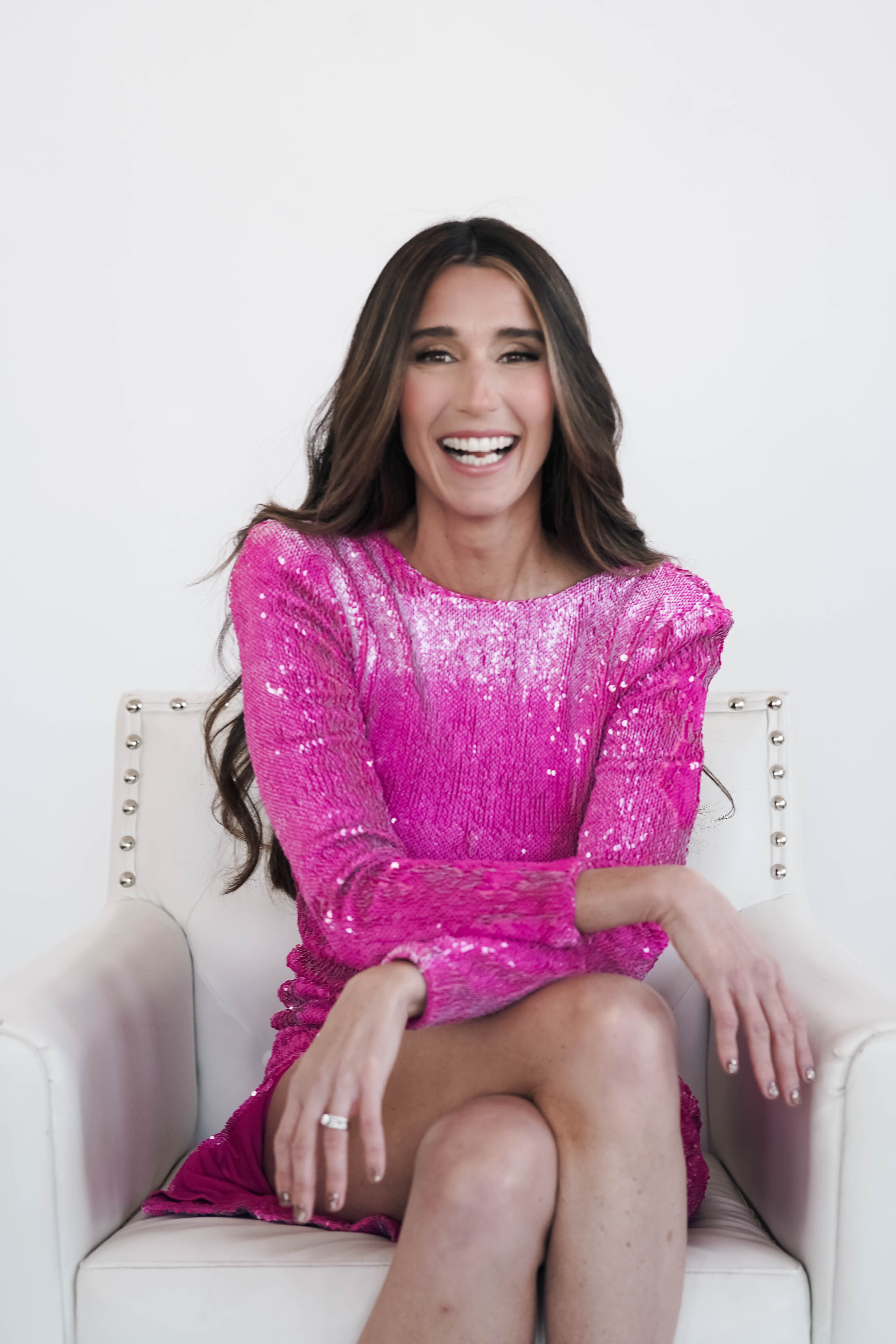
Sarah Burby
Founder of Mind Body Behavior and Clinicians for MORE
More from the Journal

You're Not Weak. You're Burned Out. There's a Difference.
BCBA burnout is not a personal failure. It's what happens when people who genuinely care about helping others get trapped in systems built around bill...

BCBA Career Change: You're Not Starting Over, You're Adding On
BCBAs change careers every day, and most of them are not starting from scratch. They are taking years of behavior science training, clinical observati...
